
Housing Onward: July Update

By Ken Smith, Housing Policy Director

What I’m Watching
National Trust for Historic Preservation (YouTube): Section 106 Regulations Under Threat
CNBC (YouTube): Why Buying a Condo Just Got Harder
CityNerd (YouTube): Train Travel vs. Plane Travel: A (Mostly) Sober Analysis
What I’m Reading
National Conference of State Historic Preservation Officers: The End of Section 106 As We Know it?
National Trust for Historic Preservation: Section 106 is Under Threat
Presentation Slides: Section 106 is Under Threat
Jeremy Sommer (LinkedIn): The Townhouse: A Home Named for Where it Belongs
Milwaukee Journal Sentinel: Milwaukee County finds an ally in landlords to house the homeless
Milwaukee Journal Sentinel: Milwaukee County invests in affordable housing, but federal cuts loom
Vital City: Taxing Land: An Old Idea is New Again
Urban Milwaukee: See the Recommended Route for 30th Street Corridor Trail
Smart Growth America: Complete Streets, Stronger Economies
Brookings Institution: ‘Growth, but for whom?’ A new framework to measure neighborhood transformation and equity
The ROAD to Housing Act
I hope you all had a great July as we enter the last month of summer! A lot has happened this month as the federal ROAD to Housing Act of 2025 became law on July 11. While imperfect, the Act is a step forward as the most substantial piece of federal housing legislation in decades. To avoid reinventing the wheel, please see below for great analyses of the legislation. I’ll follow up in a future blog post about opportunities within the Act that exist for our state and local governments to move housing onward in Wisconsin. Meanwhile, Smart Growth America has a great high-level overview of the bill while the Bipartisan Policy Coalition gets deeper into the weeds in its overview:
Smart Growth America: 21st Century ROAD to Housing Act: What’s in the law and what’s next
Bipartisan Policy Center: Inside the Deal: What’s in the Final 21st Century ROAD to Housing Act
However, other federal actions appear to represent steps backward as federal cuts threaten to undo the progress places like Milwaukee County have made to help low-income individuals get on their feet with stable housing. It’s more difficult for people to address other challenges in their lives if they don’t know where they will sleep every night.
Further, federal rulemaking relating to historic preservation threatens the spirit and perhaps the letter of what Congress passed into law by reducing participation in the designation process, narrowing what may be deemed “historic,” and making it easier to ignore protections for structures and places deemed historically significant.

Why does the housing policy director care? In the words of the senator of the late Roman Republic, Marcus Tullius Cicero,
“To be ignorant of what occurred before you were born is to remain always a child. For what is the worth of human life, unless it is woven into the life of our ancestors by the records of history?”
Historic structures bring value, identity, and uniqueness to communities, as my colleague Tehila wrote in a June blog about how local materials shape place.
Furthermore, the reuse of historic structures is a great source to create more housing units while preserving unique historic structures with state and federal incentives via historic and low-income housing tax credits. In Wisconsin, this often includes former schoolhouse and industrial building conversions, which would otherwise be left derelict (and eventually demolished). Learn more about historic preservation and housing in this blog post.
WNN Midwest Regional Gathering
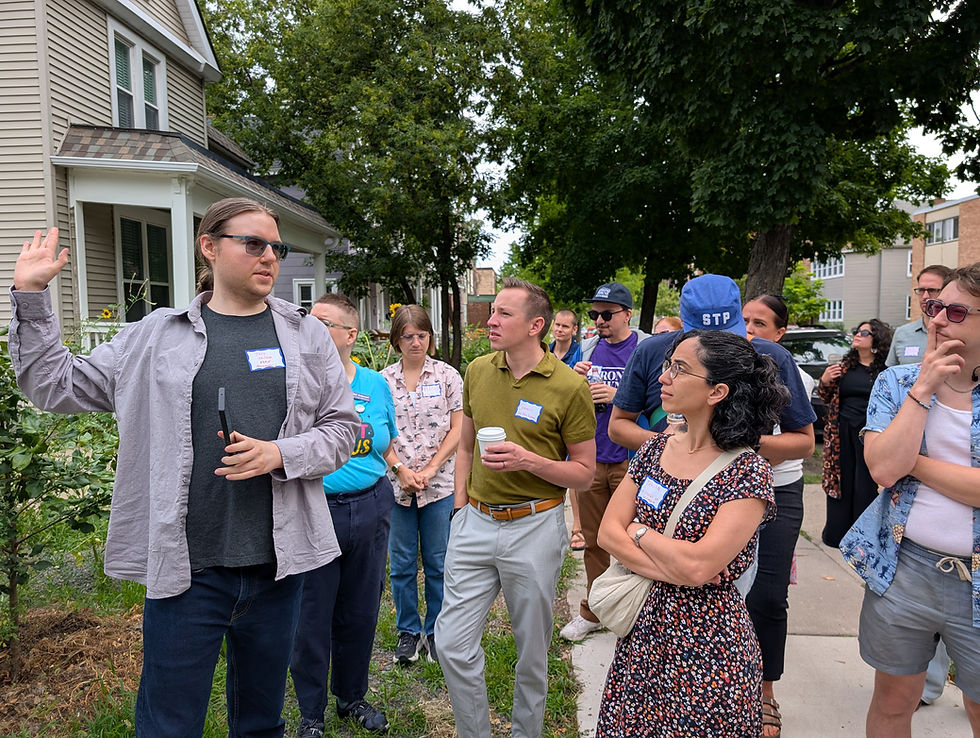
In the week of July 20, the housing team and Executive Director Trevor Roark traveled to Minneapolis to connect with the coordinating team of the Welcoming Neighbors Network and Midwestern peer organizations in the WNN relating to reforming land use and zoning, including:
In addition to great networking, the summit was a great way to share strategies and policy successes so we can move housing onward in Wisconsin. After one good conference, the following week we were able to meet with peers statewide.
A Home For Everyone Conference

Finally, on July 29-30, Tehila and I attended the A Home for Everyone Conference in Pewaukee in tandem with the Badger State Housing Alliance (1000 Friends is a member organization). The BSHA focuses on addressing affordable housing, preventing homelessness, and providing dignified housing for lower-income families. Particular credit is owed to Todd Mandel and Heather Boggs of the Wisconsin Partnership for Housing Development for staffing and organizing the conference.

The conference’s call to action was led with the opening plenary given by journalist and anthropologist Brian Goldstone, who spoke of his experiences behind his Pulitzer Prize-winning There is No Place for Us: Working and Homeless in America (2026). Akin to Matthew Desmond’s 2016 Evicted: Poverty and Profit in the American City, Goldstone spoke of the working homeless. In researching for the book, he followed five Atlanta families who worked full-time or overtime and still were not able to maintain dignified housing amid the normal challenges of everyday life. Due to their lower incomes, they were forced to live in unsafe and substandard housing. I had not read the book prior to the conference, but a line in the introduction offers a grim view of the present for too many Americans:
“It used to be that owning a home was held up as the ultimate goal, a reward for diligent effort and perseverance. Now simply having a home has become elusive for many. The myth that hard work will lead to stability has been shattered, revealing a stark disconnect between the story America tells about itself and the reality of deepening precarity. We need a new narrative, a new perspective on a nation whose citizens toil in vain for one of the most basic human necessities. The reach of homelessness is expanding. As it pulls more and more people into its grip, we might wonder: Who gets to feel secure in this country? And who are the casualties of our prosperity?”
Inspired by Goldstone’s words, we began the rest of the conference, which had content like “Housing Our Neighbors: Utilizing Shared Housing to Decrease Homelessness.” This panel was led by Director Angela Weideman and Assistant Director Angela Stokes of the Eau Claire County Department of Human Services, who have used “shared housing” as a way to promote community and affordability for vulnerable individuals. “Shared housing” may also be referred to as “SROs” (single room occupancy) or “rooming houses,” essentially a house with the bathroom(s), kitchen, laundry area, and perhaps a living room serving as common areas, with individuals having unique keys to their own rooms. There is a stigma against SROs, and many municipalities have subsequently outlawed them. However, they provide accommodation at a much more affordable price than even a studio apartment. As a graduate student in Madison, I lived in the Mansion Hill neighborhood off of the Capitol Square in a rooming house. I put myself through graduate school, so living in the SRO enabled me to enjoy a great location close to campus at a price that I otherwise would not have been able to get.

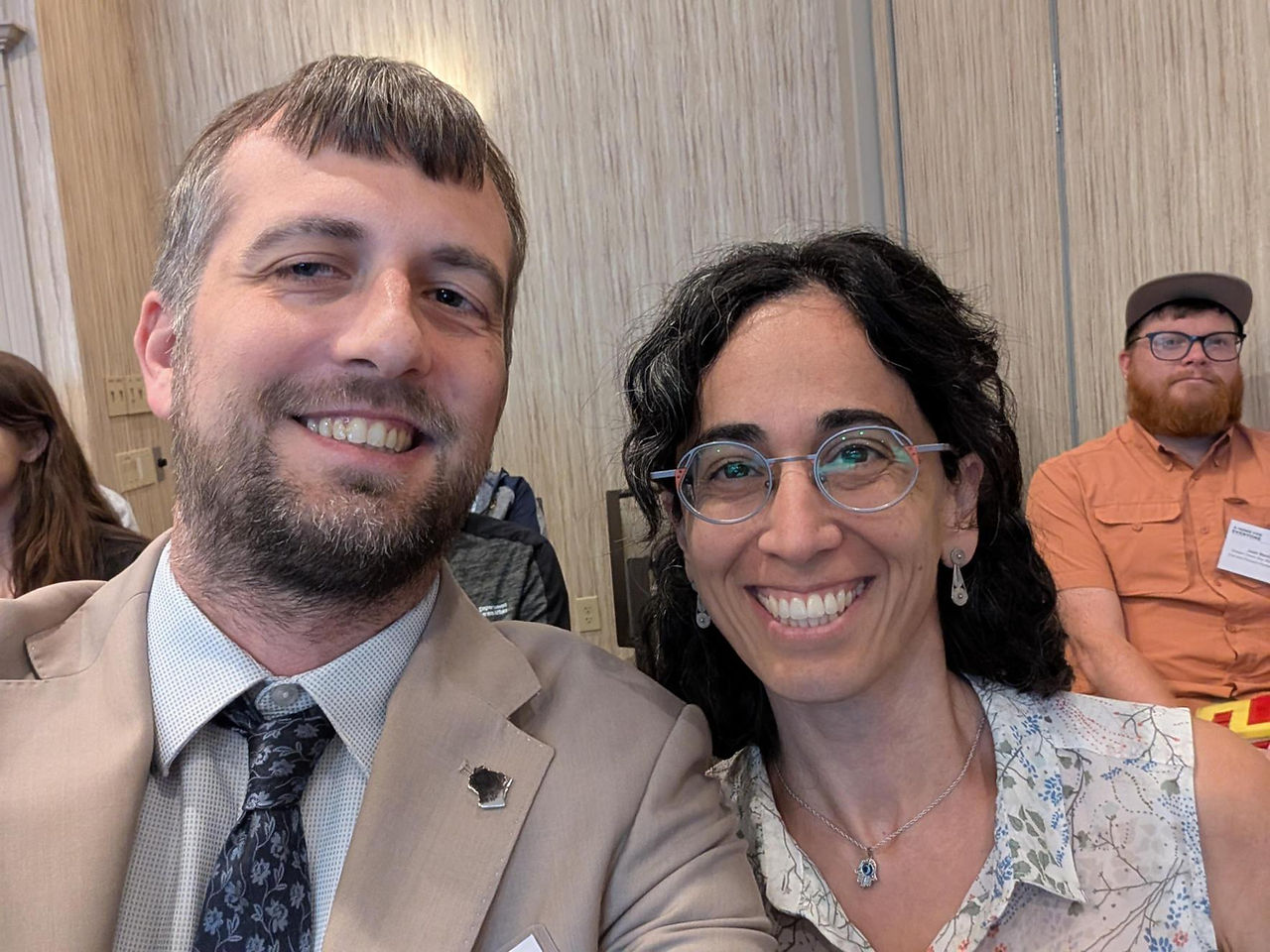


Of the many other sessions over two days, I heard Milwaukee-based Community Development Alliance (CDA) Deputy Director Frank Martinez explain the CDA’s collaboration with the City of Milwaukee and Milwaukee Habitat for Humanity on its “coordinated backbone TID” strategy, using tax incremental financing on vacant city lots, in elaborately drawn tax-incremental districts (TIDs) to build affordable housing for lower-income households. This strategy could be replicated elsewhere on a large scale wherever there is sufficient municipally-owned land. The CDA has used this method in the Harambee neighborhood (TID #119-Midtown, approved 2024) and was just recently approved for the Amani neighborhood (TID #136-Amani Homeownership Initiative), which the Milwaukee Common Council approved on July 31 and received the mayor’s signature on August 3.
The Pewaukee conference was a fruitful way to learn and share best practices while meeting people from around the state involved in housing!


Comments