

Housing Glossary
Housing conversations can be filled with unfamiliar terms, acronyms, and planning jargon.
This glossary provides plain-language definitions for some of the most common terms used when we talk about housing, development, zoning, affordability, and community growth.
Types of Housing
Accessory Dwelling Unit (ADU)

A smaller, independent residential dwelling unit located on the same lot as a detached single-family home.
Condominium (Condo)
_edited.jpg)
A unit within a larger building or complex that is privately owned, while common areas are owned jointly.
Co-Operative (Co-op)

A form of shared ownership where residents own stock in a corporation that owns the property, which entitles them to a long-term lease on a unit.
Courtyard Apartments (Cottage Courts)

A multi-family housing type consisting of multiple attached or detached units arranged around a central, shared outdoor courtyard, blending higher density with community-oriented open space.
Duplex / Two-Family Structure

A residential building with two separate units joined together.
Manufactured Housing

Homes built entirely in a factory under a federal building code (HUD code) and transported to a site for installation, distinct from traditional site-built homes.
Single Room Occupancy (SRO)

A residential unit intended for one individual that is generally small and may have shared amenities like bathrooms or kitchens.
Single-Family Home

A detached, independent dwelling unit located on its own lot.
Missing Middle Housing

A range of multi-family or clustered housing types, such as duplexes, triplexes, courtyard apartments, and townhomes, that are compatible in scale with single-family neighborhoods and help bridge the gap between single-family homes and high-rise apartments.
Triplex

A residential building containing three separate housing units, either stacked or side-by-side, within a single structure.
Townhomes
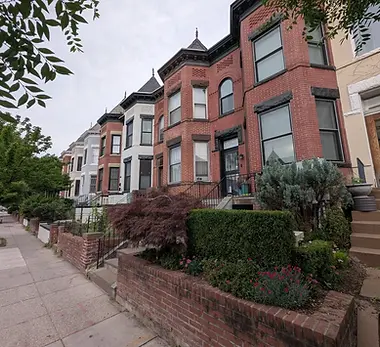
Multi-story, attached single-family dwelling units that share one or more common walls with adjacent properties, where the owner typically owns both the interior/exterior structure and the land underneath.
Zoning & Land Use
Adaptive Reuse:
The conversion of a property from one use to another. For housing purposes, the conversion of non-residential properties (e.g., schools, factories) into residential or mixed-use spaces.
Allowable Uses
The specific activities, building types, or land uses permitted by right within a particular zoning district without requiring special municipal approval.
Density
The number of housing units allowed on a specific amount of land.
Minimum Lot Dimensions (Lot Sizes)
Regulatory requirements dictating the smallest allowable square footage, width, or depth a parcel of land must have to legally construct a building.
Parking Mandates / Mandatory Parking Minimums
Municipal regulations requiring developers to provide a specific minimum number of off-street parking spaces for a building based on its size or number of housing units.
Right-of-Way (ROW) Width Reduction
Narrowing the legally required width of a street corridor (including lanes, sidewalks, and utilities), such as down to 50 feet or less for local residential streets, to reduce infrastructure costs, slow traffic, and maximize buildable land for housing.
Setbacks
The minimum distance required by zoning regulations between a building or other improvement and the property line.
Transit-Oriented Development (TOD)
A planning framework that creates dense, walkable, mixed-use communities centered around high-quality public transit routes, often facilitated through standalone zoning districts or overlay zoning districts. Also used as a means to finance transportation development through enhanced land value capture from development along transit nodes (ex.: streetcar suburbs).
Upzoning
The process of changing zoning ordinances to allow for higher density, such as allowing multi-family housing in areas previously zoned for single-family homes or a reduction or elimination of height limits.
Zoning
Local regulations that divide land into districts for specific uses, such as residential, commercial, or industrial.
Affordable Housing, Development & Finance

.jpg)
Affordable Housing
Generally defined as housing where occupants pay no more than 30% of their gross income on housing costs (including utilities).
Area Median Income (AMI)
The midpoint income for a specific geographic area, used as a demographic data point and often to determine eligibility for affordable housing programs.
Community Land Trust (CLT)
A nonprofit organization that holds land on behalf of the community to provide permanently affordable housing. Ownership of the improvements (i.e., the house) is retained by a private owner, often with resale limitations below market value.
Low-Income Housing Tax Credit (LIHTC)
A federal tax credit overseen by the Internal Revenue Service (IRS) and distributed by state Housing Finance Authorities (HFAs) that incentivizes private investment in new affordable multifamily housing development. The Wisconsin Housing and Economic Development Authority (WHEDA) is Wisconsin’s HFA. Some states, including Wisconsin, have additional state LIHTCs.
Mixed-Income Housing
Developments that combine affordable and market-rate housing units in the same project.
Housing Burdened
When a household pays 30% or more of its income toward housing.
Extremely Housing Burdened
When a household pays 50% or more of its income toward housing.
Market-Rate Development
Housing units that are built and sold or rented on the open market without public subsidies or income restrictions, with prices determined purely by broader economic supply and demand.
Subsidy Caps
Statutory or regulatory hard limits placed on the maximum amount of public financial assistance or tax credits a single project or developer can receive from municipal, state, or federal programs.
Workforce Housing
Housing affordable to moderate-income individuals and families who work in the community but may struggle with high market-rate costs.
Appreciation
An increase in the value of a property due to market conditions or other causes.
Capital Stack
The different types of financing developers use, which, combined, finance real estate development. Different financing types include equity, debt, private and/or public grants, tax credits, and TIF.
Equity
A homeowner's financial interest in a property; the difference between the fair market value of the property and the amount still owed on the mortgage.
Financialization / Commodification of Housing
The growing treatment of housing primarily as a financial asset or commodity for profit and investment, rather than as a fundamental human need or social good.
Permanent Supportive Housing (PSH)
Affordable housing combined with support services (like mental health care) for individuals transitioning from instability.
Pro Forma
A financial model or spreadsheet projection used by developers and city officials to analyze a project's estimated revenues, construction costs, debt service, and overall financial feasibility.
Capital Stack
The different types of financing developers use, which, combined, finance real estate development. Different financing types include equity, debt, private and/or public grants, tax credits, and TIF.
Historic Tax Credit (HTC)
A federal tax credit that incentivizes the restoration and/or adaptive reuse of historic structures. Properties must obtain listing on the National Park Service’s National Register of Historic Places via State Historic Preservation Offices (SHPOs). Wisconsin’s SHPO is within the Wisconsin Historical Society. Some states, including Wisconsin, have additional state HTCs. HTCs are often paired with LIHTCs in developer capital stacks.
Tax Incremental Financing (TIF)
A public financing method used by local governments to subsidize redevelopment, infrastructure, and other community-improvement projects by capturing future increases in property tax revenues generated by the development. The future increases are captured within specific Tax Incremental Districts (TIDs). Wisconsin law limits the ability for municipalities to TIF to a maximum of X percent of the equalized assessed value.

Other Common Terms
Fair Housing Act
A federal law that prohibits discrimination in housing based on race, color, religion, sex, familial status, or national origin.
NIMBY "Not in My Backyard"
A term for residents who oppose new development, particularly affordable housing, in their neighborhood.
Preemption (State vs. Municipal Authority)
A legal doctrine where a higher level of government (such as State legislature) limits or overrides the authority of a lower level of government (such as a city council) over specific policy areas like zoning, parking requirements, or rent control. Under U.S. jurisprudence, local governments are “creatures of the state.”
Racial Covenants
Discriminatory, legally binding clauses written into real estate deeds and property titles that historically prohibited Black people, Indigenous people, and other marginalized groups from buying, leasing, or occupying homes in specific neighborhoods.
Redlining
The historic, discriminatory practice by the federal government and private financial institutions of drawing literal lines on maps around neighborhoods, predominantly communities of color, and refusing to invest, provide mortgages, or offer insurance within those boundaries.
Segregation
The systemic spatial and social separation of racial, ethnic, or socioeconomic groups within a city, region, or neighborhood, historically enforced by legal, financial, and planning policies.
Yigby "Yes In God's Backyard"
A movement that supports developing housing on land owned by religious institutions, such as churches, synagogues, and mosques, particularly when that land is underused or well-suited for housing. YIGBY projects can create new affordable or workforce housing while helping faith communities make productive use of their property.
Yimby "Yes In My Backyard"
A movement supporting increased housing development and density, including affordable housing, in their communities.